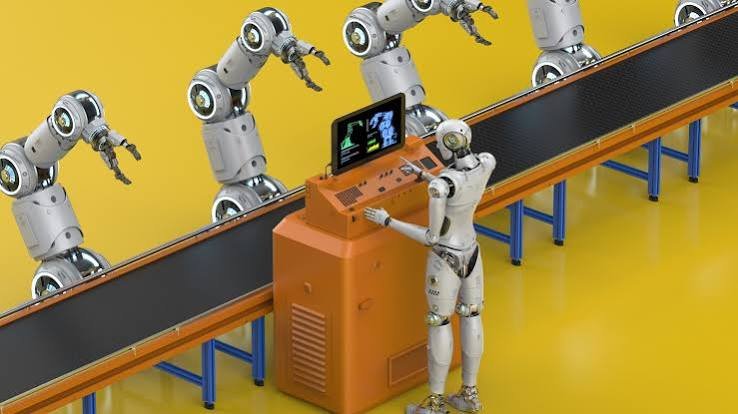
Robotics technology has moved far beyond the world of science fiction. Today, robots are becoming an important part of modern life, helping people in factories, hospitals, warehouses, farms, homes, and even outer space. From machines that assemble cars to robotic systems that assist surgeons, robotics technology is changing the way work is performed and how businesses solve complex problems.
At its core, robotics technology combines mechanical engineering, electronics, computer science, artificial intelligence, and software to create machines that can perform tasks automatically or with limited human control. Some robots follow carefully programmed instructions, while more advanced systems can use sensors and artificial intelligence to understand their surroundings and respond to changing situations.
As technology continues to develop, robotics is becoming more capable, flexible, and accessible. This article explores what robotics technology means, how it works, where it is being used, its major benefits and challenges, and what the future may look like.
What Is Robotics Technology?
Robotics technology refers to the design, development, programming, and use of robots and robotic systems. A robot is generally a machine capable of carrying out physical tasks, either independently or under human supervision.
Modern robots can perform simple repetitive actions as well as highly sophisticated operations. For example, an industrial robot may repeatedly move components from one location to another, while a medical robot can assist a surgeon during a delicate procedure.
Most robotic systems include several important components. Sensors allow robots to collect information about their environment. Actuators enable physical movement, while controllers and software determine how the robot should respond. Cameras, microphones, pressure sensors, and other technologies can help robots recognize objects, detect obstacles, and interact with people.
Artificial intelligence is also playing an increasingly important role. By combining robotics with AI, machines can analyze information, recognize patterns, and make decisions in situations that are not completely predictable.
How Does Robotics Technology Work?
Robotics technology works through the combination of hardware and software. The hardware provides the physical structure and movement capabilities, while software controls what the robot does.
Sensors are one of the most important parts of a modern robot. They provide information about the robot’s surroundings. For instance, a warehouse robot may use cameras or other sensors to identify shelves, packages, and people.
The collected information is then processed by a computer or onboard control system. The software interprets the data and determines the appropriate action. Motors and actuators then carry out that action.
Some robots operate according to fixed instructions. Others use machine learning and artificial intelligence to adapt to different conditions. This difference is important because robots that can respond to changing environments have a much wider range of possible applications.
Applications of Robotics Technology
Robotics technology is now being used across many industries.
Manufacturing
Manufacturing is one of the most established areas for robotics. Factories use robots for welding, painting, assembly, packaging, inspection, and material handling. Robots can perform repetitive tasks quickly and consistently, making them particularly useful in large-scale production.
Collaborative robots, often called cobots, are designed to work alongside human employees. Instead of completely replacing people, these systems can assist workers with physically demanding or repetitive activities.
Healthcare
Robotics is also transforming healthcare. Robotic systems can assist medical professionals with certain surgical procedures, rehabilitation, diagnostics, and patient care.
Surgical robots can provide precise movements and improved control during some procedures. Rehabilitation robots can help patients practice controlled movements after injuries or medical conditions.
Robotic technology is also being explored for hospital logistics, including transporting medicines, supplies, and equipment.
Agriculture
Farmers are increasingly using technology to improve efficiency and manage resources. Agricultural robots can help with tasks such as planting, harvesting, crop monitoring, and weed detection.
Robots equipped with cameras and sensors can inspect crops and identify areas that may require attention. This can support more targeted use of water, fertilizers, and other agricultural resources.
Warehousing and Logistics
The growth of online shopping has increased demand for efficient warehouse operations. Robots can transport products, organize inventory, move packages, and support order fulfillment.
Automated mobile robots can navigate warehouse environments and deliver items between different workstations. These systems can help businesses handle large numbers of orders while reducing some of the physical workload placed on employees.
Space Exploration
Robotics technology is particularly valuable in space exploration because robots can operate in environments that are dangerous or difficult for humans.
Space agencies have used robotic vehicles to explore planets and other celestial bodies. These machines can collect scientific information, photograph distant environments, and perform tasks that would be difficult or impossible for human explorers to carry out directly.
Homes and Everyday Life
Robotics is no longer limited to factories and research laboratories. Consumers can now use robotic devices for household tasks.
Robot vacuum cleaners, lawn-mowing robots, and other automated devices can perform routine chores with limited human involvement. Although these products are generally simpler than industrial robots, they demonstrate how robotics is gradually becoming part of everyday life.
Benefits of Robotics Technology
One of the major advantages of robotics technology is consistency. Robots can repeat the same task many times without experiencing fatigue in the same way humans do. This can be valuable for repetitive manufacturing and inspection processes.
Robots can also improve safety by performing tasks in dangerous environments. They may be used around toxic substances, extreme temperatures, heavy machinery, or unstable structures.
Another benefit is precision. Advanced robotic systems can perform highly controlled movements, which can be useful in manufacturing, medical procedures, and laboratory research.
Robotics can also help organizations increase productivity. A properly designed automated system may operate for long periods and perform certain tasks at a predictable speed.
However, the benefits depend heavily on how robotic systems are designed and implemented. Automation is not automatically beneficial in every situation. Businesses need to consider costs, maintenance, employee training, safety, and the suitability of a particular task for automation.
Challenges of Robotics Technology
Despite its many advantages, robotics technology has several challenges.
One major challenge is cost. Advanced robots can require significant investment in equipment, software, installation, maintenance, and employee training. For smaller businesses, these expenses can make adoption difficult.
Another challenge is complexity. Robots need to be programmed, maintained, and monitored. If a system fails, specialized knowledge may be required to diagnose and repair it.
Safety is another important consideration. Robots operating around people must be carefully designed and controlled. Sensors, safety systems, software safeguards, and appropriate workplace procedures are necessary to reduce risks.
There are also concerns about employment. Automation can change the types of jobs available and may reduce the need for people to perform certain repetitive tasks. At the same time, robotics creates demand for technicians, engineers, programmers, system operators, and other professionals. The overall impact can therefore vary significantly between industries and occupations.
The Role of Artificial Intelligence in Robotics
Artificial intelligence is helping make robots more adaptable. Traditional robots often depend on predefined instructions, while AI-powered systems can process large amounts of information and respond to situations that were not explicitly programmed.
Computer vision, for example, allows robots to interpret visual information. Machine learning can help systems improve their performance based on data. Natural language technologies may allow robots to understand certain human instructions.
The combination of AI and robotics could lead to machines that are better at navigating unpredictable environments, recognizing objects, and cooperating with people. However, these systems still have limitations and require careful testing and supervision.
The Future of Robotics Technology
The future of robotics technology is likely to involve greater integration between robots, artificial intelligence, cloud computing, sensors, and connected devices.
Robots may become more capable of working in environments designed for humans rather than specialized industrial spaces. This could increase their use in healthcare, transportation, construction, agriculture, retail, and domestic environments.
Another important trend is human-robot collaboration. Instead of viewing robots only as replacements for human workers, many organizations are developing systems in which robots handle repetitive, dangerous, or physically demanding tasks while humans focus on decision-making, communication, creativity, and problem-solving.
Education and training will also become increasingly important. As robotics changes workplaces, workers may need opportunities to develop technical and digital skills that allow them to operate, supervise, maintain, or work alongside robotic systems.
Ultimately, the future of robotics will depend not only on technological progress but also on responsible development, workplace safety, economic considerations, and how societies choose to integrate automation into everyday life.
Frequently Asked Questions About Robotics Technology
1. What is robotics technology?
Robotics technology is the field involved in designing, building, programming, and operating robots. It combines areas such as mechanical engineering, electronics, computer science, software development, sensors, and artificial intelligence.
2. Where is robotics technology used?
Robotics technology is used in many fields, including manufacturing, healthcare, agriculture, logistics, construction, space exploration, research, and household applications. Its use continues to expand as robots become more affordable and capable.
3. How does artificial intelligence improve robotics?
Artificial intelligence can help robots process information, recognize objects, understand patterns, navigate environments, and respond to changing situations. This can make robotic systems more flexible than machines that rely only on fixed instructions.
4. What are the main benefits of robotics technology?
Major benefits include improved precision, consistent performance, increased productivity, and the ability to perform dangerous or physically demanding tasks. Robots can also support workers by handling repetitive activities.
5. Can robots replace human workers?
Robots can automate certain tasks that humans currently perform, particularly repetitive or predictable activities. However, automation does not affect every occupation in the same way. It can also create new roles involving robot programming, maintenance, supervision, design, and operation.
6. Is robotics technology expensive?
The cost varies considerably depending on the type and complexity of the robotic system. A simple consumer robot may be relatively affordable, while advanced industrial or medical systems can require substantial investment in equipment, installation, software, maintenance, and training.
Conclusion
Robotics technology is changing industries and creating new possibilities for both businesses and individuals. From manufacturing and healthcare to agriculture, logistics, space exploration, and household tasks, robots are already performing a wide variety of useful functions.
The technology offers benefits such as precision, consistency, productivity, and the ability to perform dangerous tasks. At the same time, challenges involving cost, safety, complexity, employment, and responsible development must be considered.
As artificial intelligence and robotics continue to advance, robots are likely to become more capable of understanding their environments and working alongside humans. The most important question is not simply how advanced robots can become, but how people can use this technology responsibly to solve real-world problems and improve the way work and daily life are organized.